|
 |
|

|
|
|
Taylor, Nicholas, Pierce H. Jones, M. Jennison Kipp,
and Craig R. Miller. 2011. "Evaluating the
Energy Performance of HERS-Rated Homes Using Annual
Community Baselines." In Proceedings, Strengthening
the Green Foundation: Research & Policy Directions
for Development & Finance. New Orleans, LA: Federal
Reserve Bank of Atlanta.
http://www.frbatlanta.org/documents/news/conferences/11green_paper_jones.pdf
Jones, P.H., N.W. Taylor, M.J. Kipp, and H.S. Knowles.
2010. "Quantifying
Household Energy Performance Using Annual Community
Baselines." International Journal of
Energy Sector Management 4 (4): 593-613.
'This article is © Emerald Group Publishing and
permission has been granted for this version to appear
here (www.buildgreen.ufl.edu).
Emerald does not grant permission for this article to
be further copied/distributed or hosted elsewhere without
the express permission from Emerald Group Publishing
Limited.' www.emeraldinsight.com
Jones, P.H., U.K. Vyas, N. Taylor, and M.J. Kipp. 2010. "Residential Energy Efficiency: A Model
Methodology for Determining Performance Outcomes."
Real Estate Issues 35: 41-47.
Jones, Pierce H., Barbra C. Larson, and Mark W. Clark.
2009. "Reduced
Impact Development Practices at 'Restoration'."
In Sustainability 2009: The Next Horizon,
ed. G.L. Nelson and Imre Hronszky, 151-161. AIP. doi:10.1063/1.3208018.
Copyright (2009) American Institute of Physics. This
article may be downloaded for personal use only. Any
other use requires prior permission of the author and
the American Institute of Physics. The following article
may be found at (http://dx.doi.org/10.1063/1.3208018).
Jones, P., and U. Vyas. 2008. "Energy Performance
in Residential Green Developments: a Florida Case Study."
Real Estate Issues 33 (3): 65-71.
Jones, Pierce. 2004. "Promoting
Best Design and Product Selection Practices in Florida's
Residential Construction Industry." In
Proceedings, NSF-PATH Housing Research Agenda Workshop,
2:259-265.http://www.pathnet.org/sp.asp?id=12201
.
Smith, Marc T, and Pierce Jones. 2003. "The
Impact of Energy Efficient House Construction on Homeownership
Costs: A Comparative Study in Gainesville, Florida."
Family and Consumer Sciences Research Journal 32
(1) (September 1): 76-98. doi:10.1177/1077727X03255947.
http://onlinelibrary.wiley.com/doi/10.1177/1077727X03255947/pdf
|
|
|
|
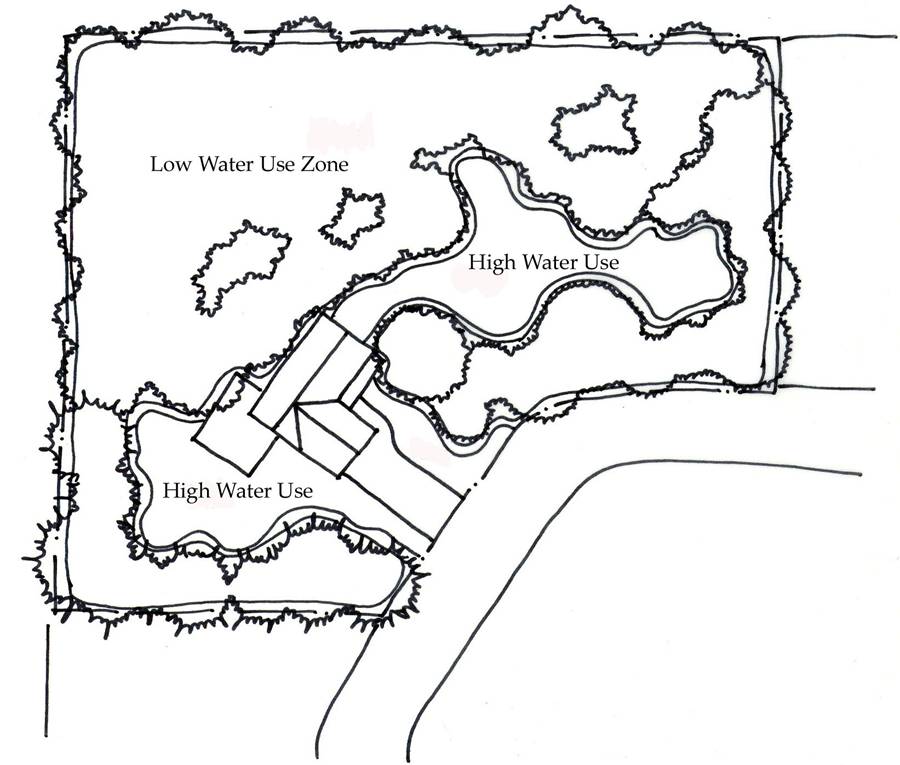
Hydrozone Design: Resources in Support of Water-Conserving
Landscape Ordinance Requirements in Pasco County,
Florida 
Author: Dänika Rain Randolph
Excerpt:"The first strategy, referred
to as the 'hydrozone concept,' suggests a different
conceptual basis for landscape design that compels
designers to relate levels of water use with levels
of human activity and with the ecological conditions
of the site…The second strategy, preservation of native
plant communities and use of native plants, considers
existing vegetation to be existing areas of low water
use, and encourages the use of native plants that
fall into low water use categories for easier establishment,
increased drought-tolerance, and regional eco-restoration."
|
|
|
|
|
|
|
Florida Sustainable Communities Summit Whitepaper
Excerpt: "Audobon International
and the University of Florida Program for Resource
Efficient Communities hosted the Florida Sustainable
Communities Summit to engage a variety of stakeholders
- including more than 100 municipal planners, developers,
architects, builders, natural resource managers, and
representatives from regulatory agencies, universities,
and conservation organizations - to strengthen efforts
to foster sustainable development in Florida"
|
|
|
|
|
|
|
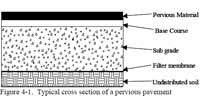
Stormwater
Infiltration at the Scale of an Individual Residential
Lot in North Central Florida
Author: Justin Haig Gregory
Excerpt: "Managing stormwater
at the scale of an urban residential lot is an alternative
to stormwater management at a larger scale. By increasing
the infiltration of stormwater on the lot, there will
be an associated decrease in runoff and an increase
in groundwater recharge. This thesis examined a number
of aspects of small-scale stormwater management that
are important if stormwater is to be managed at the
lot scale."
|
|
|
|
|
Is
a New Urban Development Model Building Greener Communities?
Authors: Kara
Youngentob, Mark Hostetler
Excerpt: "This study is one example
where a Neo-traditional model fared well in creating
a sense of community, but did not do well in promoting
environmental knowledge, attitude, and behaviors in
its residents. Though the Neo-traditional residents
felt that the designers of their development were
more concerned with the environment than did residents
of other neighborhoods, this failed to translate into
higher levels of environmentalism among residents
within the Neo-traditional development."
|
|
|
|
|